

 Esp.
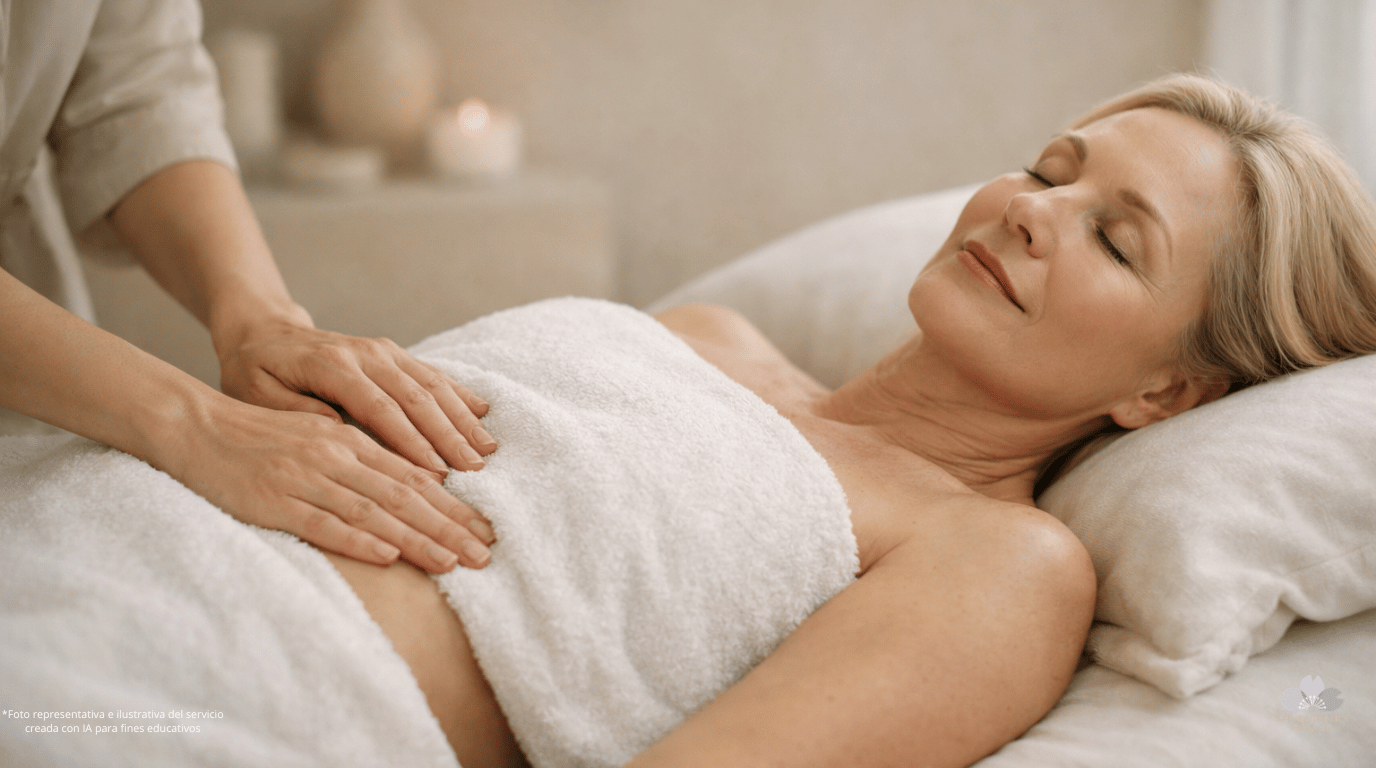
This is a very common question: “If I exercise, will it get rid of the sagging skin on my stomach?”
The honest answer is: exercise goes a long way toward making your stomach look firmer, but it doesn’t always completely “eliminate” sagging skin.
That’s because muscle (which you can train) is one thing, and skin (which responds based on its quality and ability to “shrink back”) is another.
At Well-Aging, we focus on what you can control: stimulating your body’s natural processes, staying consistent, and choosing non-invasive techniques.
Beauty is cultivated, not imposed.
Contents
What kind of sagging are we talking about?
“Abdominal sagging” usually refers to three different things.
One is subcutaneous fat (volume). Another is a lack of muscle tone (support). And the third is loose skin (tissue that has lost its elasticity).
Exercise is very effective for the first two. As for the third, it helps, but only to a certain extent.

What Exercise Can Improve—and Why It Works
If you do strength training consistently, your abdominal and core muscles will gain density and tone.
This “fills out” the area underneath and can improve your visual silhouette, even if your skin doesn’t change at the same rate.
In addition, sustained exercise is associated with better circulation and internal signals that promote skin health. Some research links physical activity to improvements in skin structure and markers related to collagen and fibroblast function.
What exercise cannot promise
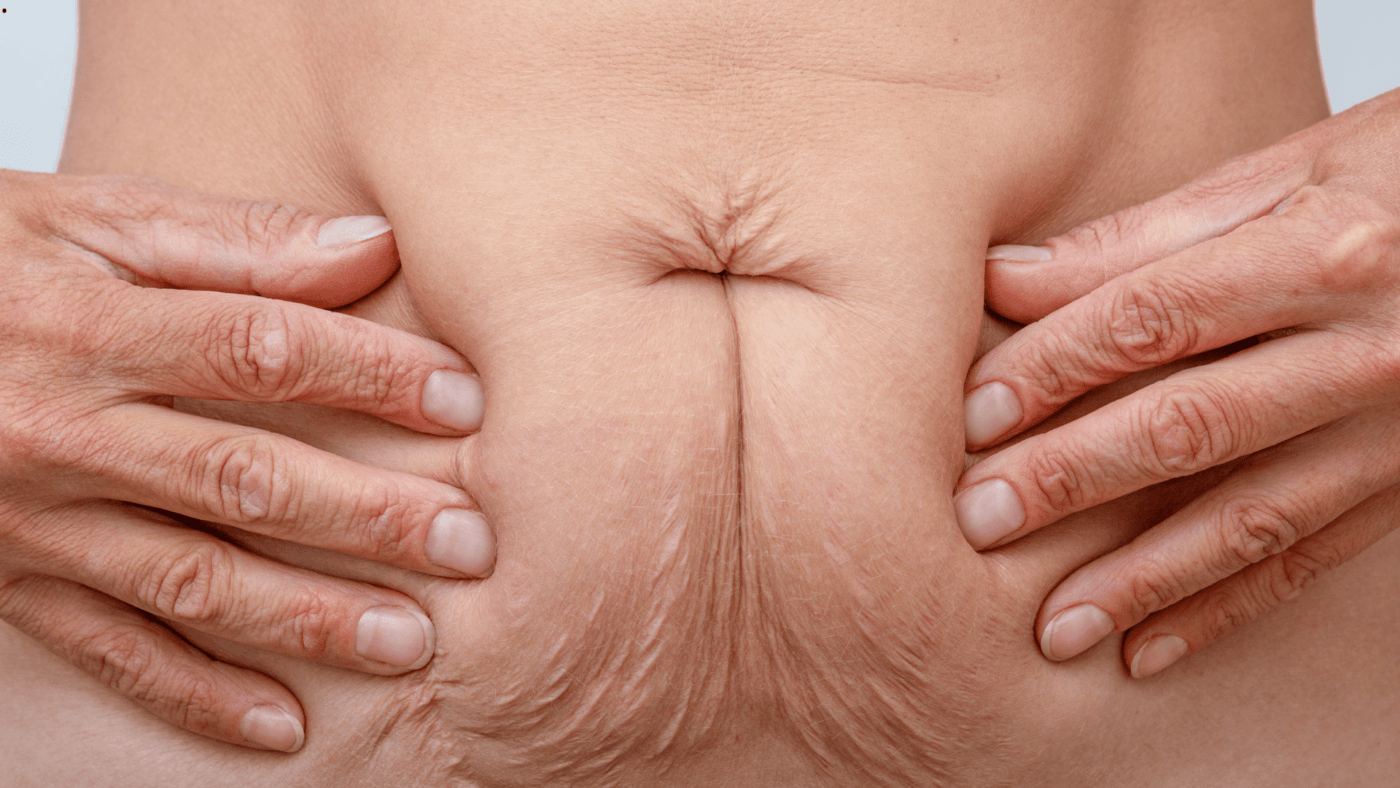
If the skin is very stretched (due to significant weight fluctuations, pregnancy, or aging), it doesn’t always “snap back” just from exercise.
This is because the skin relies on its internal network of collagen, elastin, and endogenous hyaluronic acid. When that network is weakened, the skin’s recovery is slower and, at times, incomplete.
That’s why saying “do sit-ups and the sagging will go away” is an oversimplification.
The 4 Factors That Most Affect the Outcome
First: the rate of physical change. Losing weight quickly often leaves the skin no time to adapt.
Second: age and exposure history (sun, tobacco, stress, sleep). The skin “remembers.”
Third: genetics and skin quality.
Fourth: true consistency. The skin responds to repeated signals, not to sporadic intense efforts.
The Well-Aging Plan: A “Gym” for Muscles and Skin
Think of your abdomen as two parallel workouts.
One is the “muscle gym” (strength + core). The other is the “skin gym”: habits and techniques that promote fibroblast activity.
Here, we avoid needles, fillers, botulinum toxin, and the scalpel. We also avoid aggressive techniques.
We aim for gradual, real, and sustainable results.
What kind of exercise is best if your goal is firmness?
Prioritize strength training 2–4 days a week: legs, back, and core. The abdomen “holds up” better when the whole body is aligned.
Combine this with moderate cardio and walking. Not to burn more calories, but to regulate stress and sleep.
The AAD (American Academy of Dermatology) notes that regular exercise can improve circulation and promote a healthier-looking complexion.
And one important point: if you’re in the postpartum period or feel your abdomen “bulge out” when you strain, it’s worth seeking professional guidance to exercise safely.
When You Want to Speed Things Up: Non-Invasive Tissue Stimulation
If your goal is to improve skin quality (not just skin tone), noninvasive technologies can help as a complementary treatment.
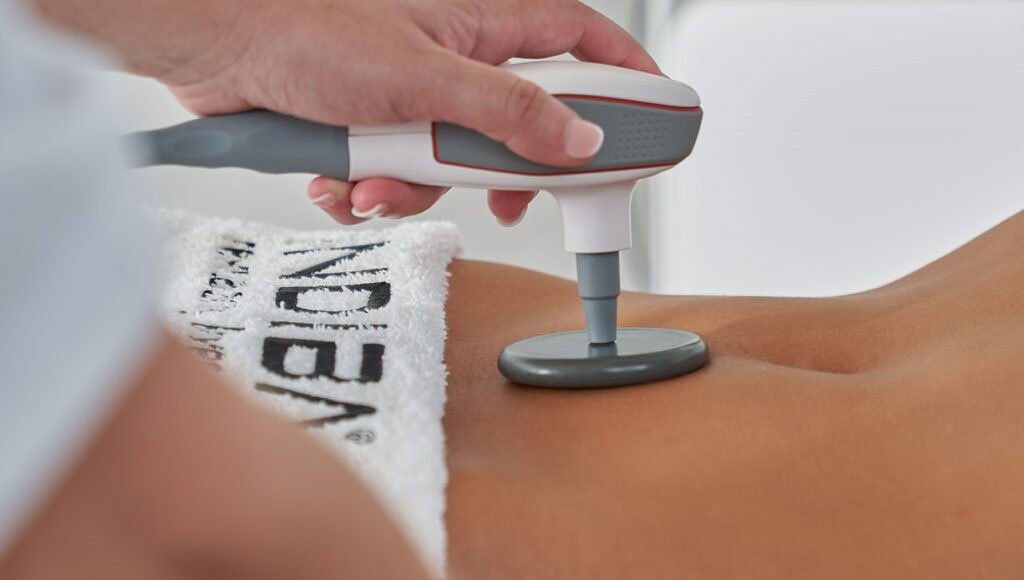
At Sakura, we use INDIBA® Deep Beauty (448 kHz) and LPG Endermologie® to promote a environment of biostimulation and tissue support, in line with our Well-Aging philosophy.
We also incorporate manual techniques (Kobido, facial lifting, intraoral massage applied to the face when appropriate, and gentle manual bodywork when drainage and increased tissue elasticity are needed), as well as supportive skincare products such as Natura Bissé – 3D Collagen.
It’s not magic. It’s consistency plus intelligent stimulation.
| Technique / stimulus | Biological benefit |
|---|---|
| Strength Training (2–4 days/week) | Improves muscle support; promotes signals associated with tissue remodeling and metabolic well-being. |
| Moderate cardio + walking | Improves circulation and stress management; supports an environment conducive to healthy skin. |
| Recovery habits (sleep, hydration, protein) | It supports **collagen** synthesis and maintenance of the dermal matrix. |
| INDIBA® Deep Beauty (448 kHz) | Non-invasive biostimulation support; focus on tissue balance and skin quality. |
| LPG Endermologie® | Noninvasive mechanical stimulation; support for microcirculation and tissue appearance. |
| Natura Bissé – 3D Collagen | A cosmetic product that promotes skin hydration and comfort; part of the Well-Aging routine. |
Frequently Asked Questions.
How long does it take to see improvement from exercise?
For most people, muscle tone and body contour begin to change within 8–12 weeks, provided they exercise consistently.
Is the sagging caused by fat or skin? How can I tell the difference?
If tightening your abdomen significantly improves the appearance, it’s usually more a matter of muscle tone. If there’s “excess” skin when you pinch it, it’s more a matter of skin laxity.
Can you improve this without invasive procedures?
Yes. Through strength training, healthy habits, and non-invasive progressive stimulation techniques. The key is having a plan and sticking with it.
References
- American Academy of Dermatology (AAD). Recommendations on Exercise and the Skin. (aad.org)
- Oizumi R. et al. Review on exercise and skin function (2024). (pmc.ncbi.nlm.nih.gov)
- Nishikori S. et al. Resistance training and changes in the skin (2023, PMC). (pmc.ncbi.nlm.nih.gov)
- INDIBA. Official information from INDIBA Beauty. (indiba.com)
Note on her background: Victoria García Zuazo is the Director of Sakura Estética Avanzada and the educational spokesperson for the clinic’s Well-Aging approach (no medical claims, no promises of results).
If you are comparing non-invasive aesthetic options, learn what an INDIBA body radiofrequency session involves.

Asistente Sakura
Al usar este chat, aceptas nuestro aviso de privacidad. Te recomendamos no compartir información médica sensible por este medio. Si tu caso requiere una orientación más específica, podremos canalizarte con una terapeuta.